Brentwood was incorporated April 15, 1969. The 1863 Battle of Brentwood, Ravenswood, Boiling Spring Academy and every National Register listing.
Last checked Oct. 18, 2026. Updated Oct. 18, 2026. History comes from the City of Brentwood’s history page and city timeline; National Register listings come from the National Park Service’s National Register data (May 22, 2026, file). Questions about local history: the Brentwood Historic Commission, 615-371-2259.
Before Brentwood
People of the Mississippian culture built villages here in the 15th century and left by sometime in the 16th, the city says, with settlements where the Meadowlake subdivision, the Brentwood Library and the Boiling Spring Academy are today. The city’s Primm Park mound page puts people at the site from about A.D. 900 to 1450, in a palisaded town with five mounds. Only one mound survives.
After the Revolutionary War, North Carolina paid its soldiers in land grants in a “Military District” centered on Nashville, and settlers moved in. The Mayfield family were probably the earliest, on what is now Old Smyrna Road east of Wilson Pike. Sutherland Mayfield, a son and a farmhand were killed in an attack in 1789. John Frost bought the old Mayfield Station property in 1810; his home, Cottonport, held the general store, the grist mill and a post office opened in 1829.
Who to call
- Brentwood Historic Commission: staff contact Charles Booth, 615-371-2259
- Ravenswood Mansion (events): 615-946-0389, 1825 Wilson Pike
- Brentwood Room, John P. Holt Brentwood Library: 615-371-0090, 8109 Concord Road
The village and the Civil War
The Tennessee and Alabama Railroad picked Atkinson’s Gap, a break in the hills south of Nashville, for its line to Franklin. Francis Pecantet, a French-born lawyer, and James M. Hall laid out a village along the tracks in today’s Church Street area, named it Brentwood and began selling lots in 1856. A store that doubled as depot and post office opened, and Brentwood began as “a little backwater town,” the city says.
The Battle of Brentwood came on March 25, 1863. Col. Bloodgood and 400 Union soldiers held a knoll at what is now the corner of Maryland Way and Franklin Road, with 300 more in a blockhouse on the railroad at the Little Harpeth River. Confederate Gen. Nathan Bedford Forrest cut the telegraph wires, shelled the stockade and forced Bloodgood to surrender after a short skirmish.
After the war, freed families bought lots north and east of the depot in an area that became known as Hardscuffle, along Church Street, and built a school and churches. Interstate construction in the 1960s cut through the area and destroyed most of the original village, according to the city.
A city since 1969
In the 1930s Brentwood was known for night clubs and gambling casinos, its spot on the line between two counties making it harder to raid, the city says. Brentwood was incorporated April 15, 1969, with 3,378 people. The first commissioners, elected May 15, were John Sloan Jr., Mayor Emery Pewitt and Vice Mayor Bob Robinson. I-65 arrived in the 1960s, the Moores Lane interchange in the mid-1970s and the Concord Road interchange in the late 1980s, and Truman Ward’s horse farm became the Maryland Farms business park starting in 1975.
Other dates from the city timeline: the population reached 9,431 in 1980; the city took over the library in 1983; Crockett Park land was bought in 1991; the Cool Springs House and the Gatlin Log House were donated and moved to Crockett Park in 1993; and the city bought the 320-acre Ravenswood Farm in 2010. The May 1-2, 2010, flood, with 14 to 17 inches of rain in under 30 hours, damaged 262 homes and was the worst natural disaster in the city’s history.
Historic sites you can visit
| Site | Where | Visiting |
|---|---|---|
| Boiling Spring Academy and mound | Primm Park, Moores Lane near Wilson Pike | Park open dawn to dusk; schoolhouse on open-house Sundays, 2 to 4 p.m. |
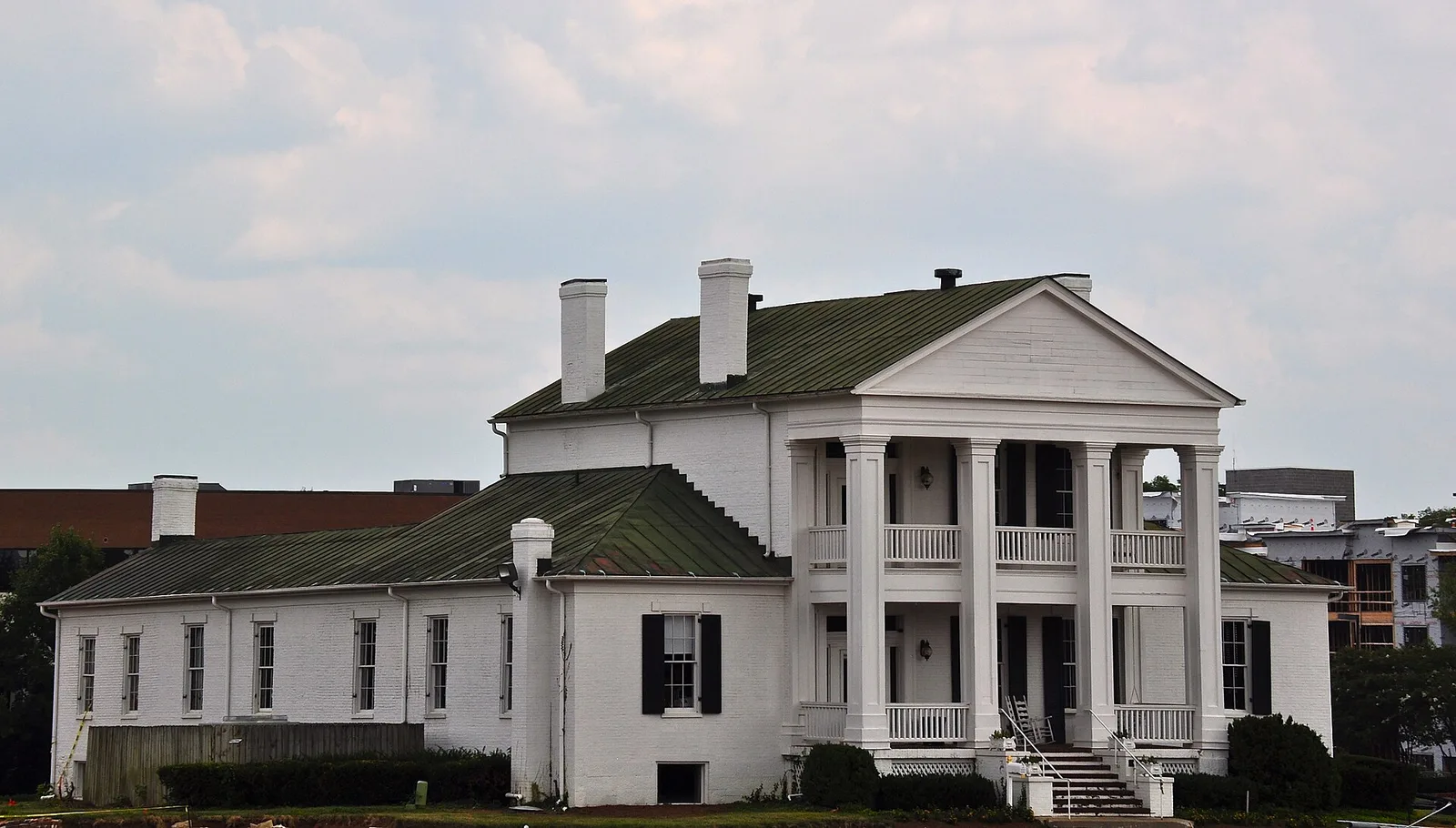
| Ravenswood Mansion (1825) | Smith Park, 1825 Wilson Pike | Grounds and trails in park hours; the house is a city-owned event venue |
| Cool Springs House (1830, its venue says) | Crockett Park, 1500 Volunteer Parkway | City-owned event venue; park open dawn to 10 p.m. |
| Brentwood Room | Library, 8109 Concord Road | Library hours; holds the commission’s history interviews |
The Boiling Spring Academy is a one-room schoolhouse built in 1830, restored by the Historic Commission after the city bought the property in 2003. The academy page lists open houses the first Sunday of the month, June through October; the Historic Commission page lists the third Sunday, May through October. Call 615-371-2259 to confirm. The city also offers a free online 360-degree tour.
The commission has marked the graves of nine Revolutionary War veterans buried in Brentwood, among them Andrew Crockett and Green Hill, on its Revolutionary War soldiers page. Most rest in family cemeteries on private land.
National Register listings in Brentwood
The National Park Service file lists these properties with a Brentwood location. Year listed in parentheses. Most are private homes; view them from the road.
Williamson County: James Johnston House, Isola Bella, U.S. 31 (1976); Mooreland, off U.S. 31 (1975); Fewkes Group Archeological Site, 8400 Moores Lane (1980; boundary enlarged 2012); Ravenswood, Wilson Pike (1983); Oak Hall, 1704 Wilson Pike (1986); Owen Chapel Church of Christ, 1101 Franklin Road (1986); Mountview, 913 Franklin Road (1986); WSM Radio Transmission Complex, 8012 Concord Road (2011); Alexander Smith House, 1304 Wilson Pike (2005).
Listed together on April 13 and 14, 1988: the Andrew Crockett House, 8230 Wikle Lane; Samuel Crockett House, Forge Seat, at Crockett Road and Wilson Pike; Joseph Elliston House, Hillsboro Road; John Frost House, Cottonport, Old Smyrna Road; Denny P. Hadley House, Green Pastures, off Franklin Road; Thomas Holt House, Holtland, Crockett Road; William Martin House, Boxwood Hall, 5215 Seward Road; Owen-Cox House, Maplelawn, Moores Lane; Owen-Primm House, Moores Lane at Wilson Pike; Constantine Sneed House, 9135 Old Smyrna Road; and the John M. Winstead Houses, Pleasant Hill, Concord Road.
Davidson County, with Brentwood addresses: McCrory-Mayfield House, 1280 Hickory Blvd. (1982), and the Arthur J. Dyer Observatory, 1000 Oman Drive (2009).
Related guides: parks and trails, things to do this month, Brentwood population and growth and moving to Brentwood.
Frequently asked questions
When was Brentwood, Tennessee incorporated?
Brentwood was incorporated as a city on April 15, 1969, with a population of 3,378, according to the city. The first city commissioners were elected May 15, 1969.
How did Brentwood get its name?
Francis Pecantet and James M. Hall laid out a village along the new Tennessee and Alabama Railroad, named it Brentwood and began selling lots in 1856, the city says.
What was the Battle of Brentwood?
On March 25, 1863, Confederate Gen. Nathan Bedford Forrest cut the telegraph wires and forced a Union garrison near today’s Maryland Way and Franklin Road to surrender after a short skirmish.
Can you visit the Boiling Spring Academy?
Yes, on open-house Sundays from 2 to 4 p.m. in the warmer months. The city’s pages list different Sundays, so call the Historic Commission’s staff contact at 615-371-2259 before you go.
How many National Register sites are in Brentwood?
The National Park Service lists 20 properties with a Brentwood location in Williamson County, plus two with Brentwood addresses on the Davidson County side.
Have your say